
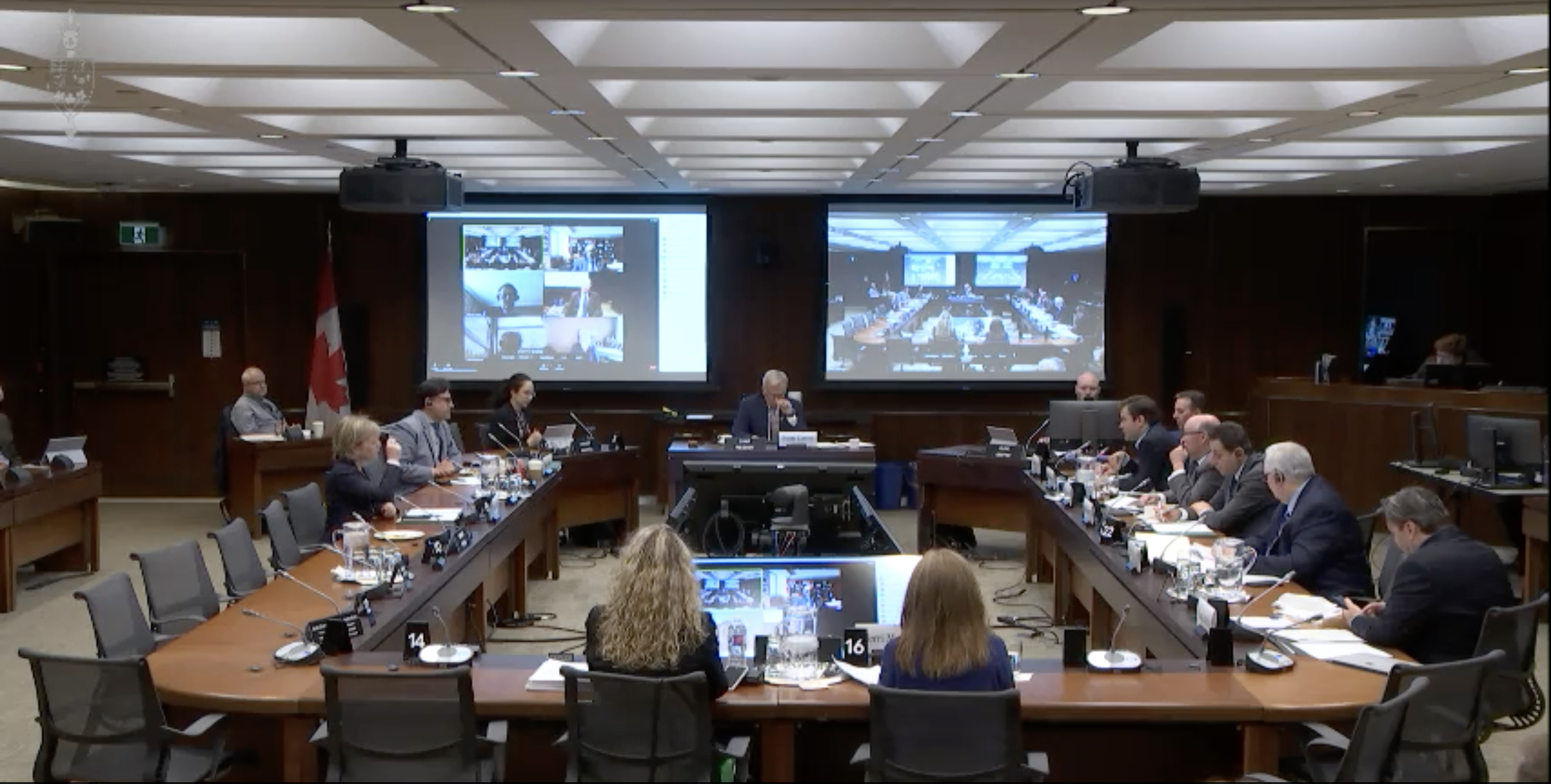
On May 11, 2023, I presented, along with patient advocates Terri McGregor (BIA-ALCL) and Julie Elliott (BII/BIA-ALCL), as a ‘witness’ to the House of Commons Standing Committee on Health (HESA) – Oversight of Medical Devices (Breast Implants).
Mr Luc Thériault, Bloc Québécois, Montcalm, Québec, Vice Chair of HESA, called for a study of the oversight of medical devices with focus on the potential creation of a Canadian breast implant registry.
Over decades previous calls for a Canadian breast implant registry through the legislative process have failed. I’m cautiously optimistic that with the benefit of hindsight underscoring the needless harm that’s resulted through failure to take affirmative action back then, this time a breast implant registry might be created.
A registry is the very least they can do. However, I hope their actions will be farther reaching.
Given requirements placed on manufacturers in the conditional re-approval of breast implants in Canada, in 2006, remain unmet I believe all breast implants in Canada are now non-compliant devices. I feel we’re at a time parallel to the 1990’s moratorium on breast implants and I ultimately hope HESA will go a large step further than a registry, and call for a pause on the sale of breast implants in Canada.
Action steps taken by Health Canada (and ALL world regulators for that matter) since 2018, when the ICIJ investigation exposed regulatory failures, appear token and fail to address the safety issues that matter most – the harms breast implants cause. What I refer to as the ‘inconvenient truths’ of breast implants.
- Multiple manmade cancers.
- Deaths
- Silicone migration which is without remedy or recourse, resulting in permanent harm. Injecting silicone is banned in Canada, however silicone migration from breast implants is tolerated. The only difference is the delivery system – the consequence to health is the same.
- Impact of chemicals in silicone and used in the production of breast implants. Siloxanes D4 / D5 were deemed toxic substances in Canada, in 2009, and recognized as being environmental hazards yet they are permitted for use in breast implants – devices implanted into the human body which remain in-situ over years (often decades). Devices which release silicone into the body with uptake in the lymph system, vital organs, near and distant tissue / muscles, and cross the blood barrier.
- Systemic illnesses
- Impact of breast implants on respiratory health
- Test for silicone toxicity / allergy.
- Test to determine who might be a poorer candidate for breast implants, experiencing greater harm.
It’s unacceptable to continue harming more generations of women without having learned the lessons of what has gone wrong and the implications. It’s unacceptable to allow manufacturers an extended grace period past the 10-year window allowed them, at the expense of the health and mortality of Canadians.
Breast implants are purely cosmetic devices without life-saving qualities and therefore the tolerated threshold for incidence of harm should be low.
It’s my position that until critical safety concerns have been adequately investigated and resolved breast implants should be recalled and manufacturer licenses revoked by Health Canada.

MY OPENING COMMENTS at HESA Meeting 68 – May 11, 2023:
Hello Mr Chair and Members of the Committee. Thank you for your interest in the creation of a breast implant registry.
I’m a patient advocate with lived experience of unknowingly having recalled implants.
Recently long time women’s advocate Anne Rochon Ford, now retired, sent me her files saved over decades. Reading through them I felt disheartened, frustrated, and angry because we’re fighting for the same safety issues today as they were back then, in the 1990’s.
The questions and concerns have been present for a long time. The fears of the risk of cancer have come true.
We shouldn’t still have to fight so hard for safety and tracking measures for devices that carry Health Canada’s highest risk rating and have known serious issues ranging from device failures, to localized complications, the impact of silicone migration, autoimmune systemic illnesses, and now a known link to cancer, deaths, and recalls.
In 2004 a bill to establish a breast implant registry was introduced in the House. How different the situation would be if that had occurred! The result has been wasted decades. Leaving Canadians with having to give consent without a clear understanding of the risks they’re taking on.
Health Canada licensed breast implants despite having no long term safety data, without a protocol of care in place and no one keeping track.
Over decades we’ve seen that industry claims of safety and incidence of harm have been misrepresented. Implanting Class IV medical devices without keeping track demonstrates disregard for patient safety.
Those profiting from breast implants have deflected responsibility for tracking them. Continuing to do nothing simply isn’t an option. It is not fair that the Canadian public continue to be sold devices where concerns are not systematically being tracked, researched and evaluated.
I strongly support the establishment of a public mandatory Registry. This will assist in post marketing research and create a system to help contact people if needed.
Many implantations are done in private for-profit clinics and increasingly through “medical tourism”. It’s important that physicians are required to register the implantations done in Canada and people who received implants elsewhere can register themselves. CIHR should be funded to undertake this project. Since the 2019 recall of textured implants linked to BIA-ALCL many affected Canadians are still unaware of the recall. This is unacceptable. Implant wearers of previous decades were similarly unaware of recalls. It’s resulted in unnecessary harm and lives lost.
Canadians with breast implants bear the consequences of inadequate oversight without device tracking. Nobody should ever be unaware that a device implanted within them has been recalled, or carries a safety warning!
A registry is but one part of the solution. We need directed research dollars to answer the myriad of questions peoples’ experiences with silicone have raised. There are many many questions that need answering. This Is not a role for the industry, given their history and their obvious conflict of Interest.
We hope this time a registry will be created and public research on breast implants funded. It will save lives and illness.
We’re at a time parallel to the 1990s moratorium. If there’s no resolve at this point for creating a breast implant registry then perhaps it’s time to hit the pause button and withdraw breast implants from the Canadian market until a registry is created.
Link to HESA meetings:
https://www.ourcommons.ca/Committees/en/HESA/StudyActivity?studyActivityId=11516574
List of meeting witnesses:
Breast Implant Safety Alliance
Julie Elliott, Patient Advocate
Terri McGregor, Patient Advocate
Breast Implant Failure and Illness Society Canada
As an individual
Dr. Jan Willem Cohen Tervaert, Professor of Medicine, University of Alberta
Scientific Advisory Committee on Health Products for Women
Canadian Society of Plastic Surgeons
As an individual
Dr. Peter Lennox, Clinical Professor, Division of Plastic Surgery, The University of British Columbia
Dr. Stephen Nicolaidis, Assistant Professor of Surgery, Université de Montréal
Department of Health
David Boudreau, Director General, Medical Devices Directorate, Health Products and Food Branch
Canadian Institute for Health Information
Juliana Wu, Director, Acute and Ambulatory Care Information Services
Canada Health Infoway
Abigail Carter-Langford, Chief Privacy and Security Officer


 Breast Implant Failure & Illness